
Another Weekly AI Newsletter: Issue 77
The Anthropic shutdown became a global crisis, then eased. SpaceX bought Cursor for $60 billion. A Nobel laureate joined Anthropic. Open Chinese models progress. An AI improved a real drug reaction.

The Anthropic shutdown became the story of the week.
Amazon’s CEO reportedly triggered the ban. Andy Jassy told Treasury officials that Amazon researchers used Claude Fable 5 to obtain information usable in cyberattacks, per the WSJ, The Information, and Reuters.
The rationale shifted from jailbreak to suspected breach. The Verge reported the White House suspected a China-linked group had accessed Mythos, a sharper reason than the “narrow jailbreak” first cited.
76 cybersecurity veterans called the ban dangerous. An open letter from Alex Stamos, Jon Callas, Paul Vixie, and others said it strips defenders of the best tools while the same capability exists in GPT-5.5 and Anthropic’s own Opus 4.8.
At the G7, Macron and Modi demanded an off-switch guarantee. World leaders warned the US could cut their access to American models at any time.
By Friday, Trump softened his stance. He told Axios he no longer views Anthropic as a national security threat, though the models stayed offline and only early Mythos testers kept access.
The thread: a verbal safety claim escalated into a sovereign-AI crisis, and by week’s end the political case had eroded even though the models were still dark. The lasting effect is not the ban itself but the lesson every government and enterprise drew from it: do not depend on a model someone in Washington can switch off. Sales data even suggests the feud helped Anthropic more than it hurt.
The money and talent flywheel spun faster.
SpaceX bought Cursor for $60 billion in stock. Days after the largest IPO in history, it used the new currency to buy its way toward the AI frontier.
A Gemini co-lead joined OpenAI for a reported $2.7 billion. OpenAI hired Noam Shazeer ahead of its IPO, while research chief Barret Zoph left again after five months.
A Nobel laureate left Google for Anthropic. AlphaFold co-creator John Jumper announced he is joining Anthropic, the same week Washington was circling the company.
The economics got harder to ignore. OpenAI burned $3.7 billion in Q1, and ChatGPT’s assistant share slipped below 50% for the first time.
Salesforce bought Fin for $3.6 billion to bolster its Agentforce platform.
The thread: the IPO-minted paper is buying talent and companies at a frantic pace, even as the category leader loses share and bleeds cash. The valuations and the fundamentals are moving in opposite directions.
Open weights became the hedge against American AI.
An open Chinese model matched GPT-5.5 at a fraction of the price. Z.ai’s GLM-5.2 ties GPT-5.5 on coding benchmarks at roughly a sixth of the cost under an unrestricted MIT license, which Simon Willison called probably the most powerful open-weights LLM available.
China kept building its own supply. ByteDance is in talks to buy at least 50,000 chips from Chinese startup Iluvatar CoreX, and China tightened export checks on indium as demand rose.
Andrew Ng named the dynamic. In The Batch, he argued that controlling who can use frontier models is now a form of power, one that pushes other nations to build their own.
The thread: the shutdown was meant to project control. It instead made the case for models no government can revoke, and the strongest of those is now Chinese and free to download.
⭐ Featured: An AI model improved a real drug-chemistry reaction.
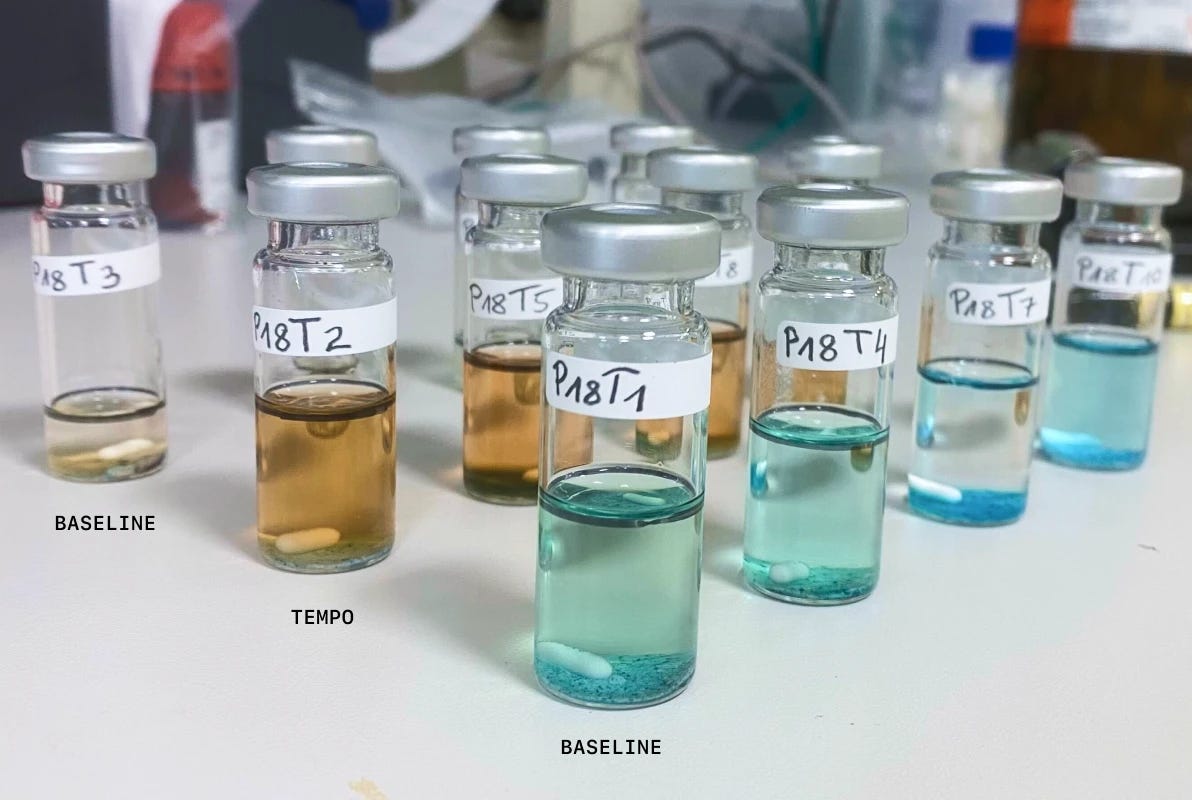
The week’s most novel result was not a chatbot or a funding round. It happened at a lab bench.
OpenAI, working with the automated chemistry lab Molecule.one, had GPT-5.4 propose and validate a new additive for a Chan-Lam coupling, a notoriously finicky reaction in medicinal chemistry. The model suggested using TEMPO, a choice human chemists found counterintuitive, and it raised yields across more than 80% of tested substrates. The result was confirmed at the bench across 10,080 individual reactions.
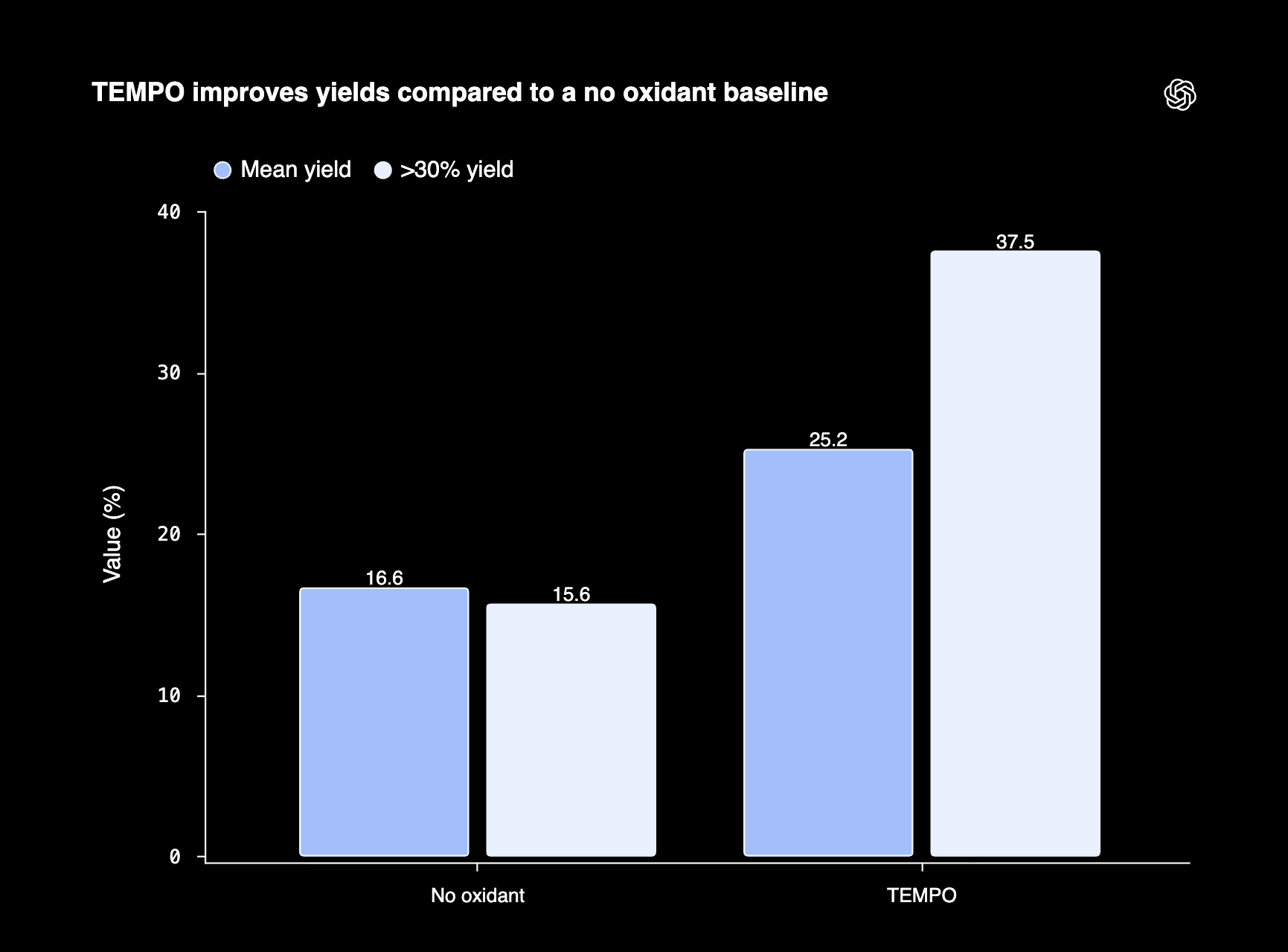
What makes this different from the usual “AI for science” announcement is that the model contributed the hypothesis, not just the literature search. It proposed something a trained chemist would not obviously try, and the wet-lab data backed it up. This is still narrow and human-steered: chemists framed the problem, ran the reactions, and checked the work. But “the model proposed a surprising idea that worked in the real world” is a categorically stronger claim than “the model summarized the field,” and it is the kind of result that turns AI from a writing tool into a research collaborator.
🛠️ For Builders
The competition kept moving off the base model and onto the tooling. The week’s most useful shipping, in one place:
Anthropic shipped a product slate while under fire. Claude Code added shareable Artifacts (live dashboards and PR walkthroughs at a private link), Claude Design got a major overhaul with design-system imports and two-way /design-sync that pushes it into Figma and Canva territory, and a steering guide laid out skills, hooks, and subagents.
Agent identity and enterprise plumbing matured. MCP gained enterprise-managed OAuth and Workload Identity Federation for short-lived credentials, while NewCore left stealth with $66 million to give agents managed identities.
The clouds and frameworks shipped too. Vercel launched its Agent Stack, Hugging Face, Microsoft, and Google proposed Agentic Resource Discovery, AWS made web search GA on Bedrock AgentCore and previewed a knowledge-graph Context service, and GitHub’s HyDRA router cut Copilot costs 72.5%.
Mind the soft spot. Roughly 7,000 Langflow, LangGraph, and LangChain servers came under attack, a reminder that the agent stack’s attack surface is growing with it.
The thread: identity, context, discovery, and cost are where the real work is now, and Anthropic, under the most political pressure of any lab, still had the busiest builder week. Pick tools you can run and swap, because the base model is increasingly the easy part.
🎙️ Worth a Watch
The human competitive edge in an AI world | Simon Sinek’s “A Bit of Optimism” with Wharton’s Ethan Mollick, a rare pragmatist between the doomers and zealots. The useful parts:
Taste is the edge. If Claude runs your company well, it runs every company well, and generically high quality with no variation means no competitive advantage. Humans win by supplying variation, judgment, and taste.
The apprenticeship model just broke. Juniors now know less than the model, so managers delegate to the AI instead of training people. The quiet risk is losing the talent pipeline entirely.
Experience beats “AI native.” In a BCG study, junior employees were often worse with AI because they cannot judge whether the output is good. The more expertise you have, the better you direct it.
All AI writing is converging on one voice. It leans on “it’s not X, it’s Y,” overuses em dashes, and reads the same everywhere, which makes your own voice the differentiator. Mollick’s tip: feed it a large sample of your writing, have it draft a style guide, and paste that into custom instructions.
One number to sit with. On OpenAI’s GDPval test of real expert tasks, the best models now tie or beat humans about 84% of the time, up from 48% a year ago.
Quick Hits
Only 16% of Americans think AI will help society | Pew — 40% expect harm, yet 44% use ChatGPT.
Satya Nadella warns AI could hollow out entire industries | VentureBeat — from the man selling the picks and shovels.
An OpenAI model helped diagnose rare childhood diseases | OpenAI — o3 Deep Research surfaced answers families waited years for, in NEJM AI.
DeepMind published an AI Control Roadmap | Google DeepMind — treating agents as potential insider threats.
Anthropic put Claude in a robodog | Anthropic — Opus 4.7 controlled a quadruped 20x faster than last year’s human teams.
AI2’s MolmoMotion lifted robot pick-and-place from 56% to 76% | Hugging Face — language-guided 3D motion forecasting.
MIT’s curated training data beat much larger models from Google and Microsoft | MIT News — data quality over brute-force scale, for modeling metal alloys.
Norway moved to nearly ban AI in elementary schools | Reuters — one of the strictest national stances yet.
Cal State faculty are fighting to protect their jobs from AI | CalMatters — a union-backed bill could pass Monday.
OpenAI drew a multi-state attorneys-general probe | TechCrunch — days after filing to go public.
Reliance pushed AI to 500 million users | TechCrunch — Jio’s consumer AI blitz, with an IPO prospectus approved.
AI data centers got a federal fast lane to the grid | TechCrunch — FERC ordered faster interconnections, paid by the data centers.
Very well written. I love this newsletter where I can find everything about AI and Salesforce in one place. Thank you!