
Another Weekly AI Newsletter: Issue 65
Anthropic's scariest model leaked. They beat the Pentagon. OpenAI said goodbye to Sora. Jensen says the computer is a factory now. The web app is already obsolete.

The Week in 5 Seconds
Anthropic's new powerful model leaked. It has serious cyber implications
Anthropic sued the Pentagon and won, temporarily.
OpenAI shut down Sora, 15 months after launch.
Jensen Huang says the computer itself just changed.
Bret Taylor says the web app is already obsolete.
The Stories
Anthropic’s secret model leaked and the cybersecurity angle is the real story
“It presages an upcoming wave of models that can exploit vulnerabilities in ways that far outpace the efforts of defenders”
Anthropic accidentally published details of a new model called Claude Mythos through a misconfigured CMS — about 3,000 assets linked to an internal blog post went public. The internal description: “by far the most powerful AI model we’ve ever developed,” scoring dramatically higher than Opus 4.6 on coding, reasoning, and cybersecurity benchmarks. The cybersecurity angle is the real story: the post described a carefully sequenced rollout designed to give defenders a head start before releasing capabilities that could let attackers find and exploit vulnerabilities faster than defenders can patch.
→ The actual leak · Fortune (leak) · Fortune (cybersecurity)
Anthropic sued the Pentagon and won, for now
“This is the first time an AI company has taken the federal government to court over AI policy and won, even temporarily.”
The Pentagon designated Anthropic a “supply chain risk” after the company refused to build Claude for mass surveillance or autonomous weapons targeting — Elizabeth Warren called it retaliation. Federal Judge Rita Lin granted a preliminary injunction, writing that “nothing in the governing statute supports the Orwellian notion that an American company may be branded a potential adversary for expressing disagreement with the government.” Then the Pentagon’s CTO said the ban would continue anyway. It’s the first time an AI company has taken the federal government to court over AI policy and won, even temporarily — and the underlying question still isn’t resolved.
→ TechCrunch (Warren) · TechCrunch (injunction) · The Verge
OpenAI says goodbye to Sora, and loses deal with Disney
“A focus on practical adoption over ‘side quests.’”
OpenAI shut down Sora, the app and the API, 15 months after launch — downloads peaked at 3.3 million in November and fell to 1.1 million by February. Disney was reportedly blindsided, and with it went a $1 billion investment and plans for AI-generated video on Disney+. The same week, the CFO told CNBC that OpenAI needs to be “ready to be a public company.” For years Altman ran OpenAI like Y Combinator, resourcing promising ideas as they emerged. That era is over: the plan now is a superapp combining ChatGPT, Codex, and Atlas. Sora’s team will work on “world simulation research to advance robotics.” The GPUs are going somewhere with a revenue line attached.
→ Wired · The Verge · TechCrunch
Bret Taylor says the web app is a horseless carriage
“The web app with all its menus, form fields, and tables starts to feel like a ‘horseless carriage’”
Sierra is Bret Taylor and Clay Bavor’s AI customer experience platform — working with 40% of the Fortune 50, rebuilt entirely around Ghostwriter, an agent that builds agents from SOPs, call transcripts, or a plain description. Explorer (deep research for your own customer conversations) and a Japan acquisition shipped the same week. The numbers: Rocket Mortgage at $1B/month in loan volume, Cigna cut authentication time 80%, SoFi up 33% on customer satisfaction.
→ Sierra (Agents as a Service) · Sierra (Japan)
Jensen Huang says we just reinvented the computer
“It’s no longer a computer, it’s a factory. It’s a factory, it’s used for generation of revenues.”
Jensen’s structural argument: computers were warehouses, built to store and retrieve what humans made in advance. That model is over — token factories generate value in real time, and every scaling law points at the same variable: compute. He also said intelligence is now a commodity, and got there specifically: 60 direct reports, each deeper in their domain than he is, calling himself a dishwasher running a room of superhumans. What kept him there for 34 years wasn’t intelligence. It was curiosity, judgment, and walking into every new problem thinking “how hard can it be.”
Quick Hits
Wikipedia bans AI-generated articles | TechCrunch — 44-2. Copyedits and first-pass translations are still in; writing is out.
David Sacks is done as AI/Crypto Czar | CNBC — Hit the 130-day federal limit. No replacement planned.
Mistral’s Voxtral TTS claims to beat ElevenLabs | Mistral — Open-weight, 3-second voice clone, nine languages, $0.016/1K chars.
SoftBank took a $40B bridge loan for its OpenAI stake | Bloomberg — 12-month term. Lenders expect an IPO this year.
Claude Code ships auto mode | Anthropic — Safety classifier approves or blocks operations automatically. Cowork gains macOS desktop control.
LiteLLM hit by a supply chain attack | LiteLLM — Credential stealer in 1.82.7–1.82.8. Quarantined in 3 hours, but 3.4M daily downloads means real exposure.
Apple will let rival AI chatbots plug into Siri in iOS 27 | Bloomberg — OpenAI loses its exclusive.
OpenAI launches a Safety Bug Bounty | OpenAI — Pays for MCP prompt injection and agent data exfiltration. Jailbreaks that just produce rude outputs are out of scope.
NVIDIA and LangChain released AI-Q | NVIDIA — Open source enterprise deep research blueprint. Tops both Deep Research Bench leaderboards.
ROI in the Wild
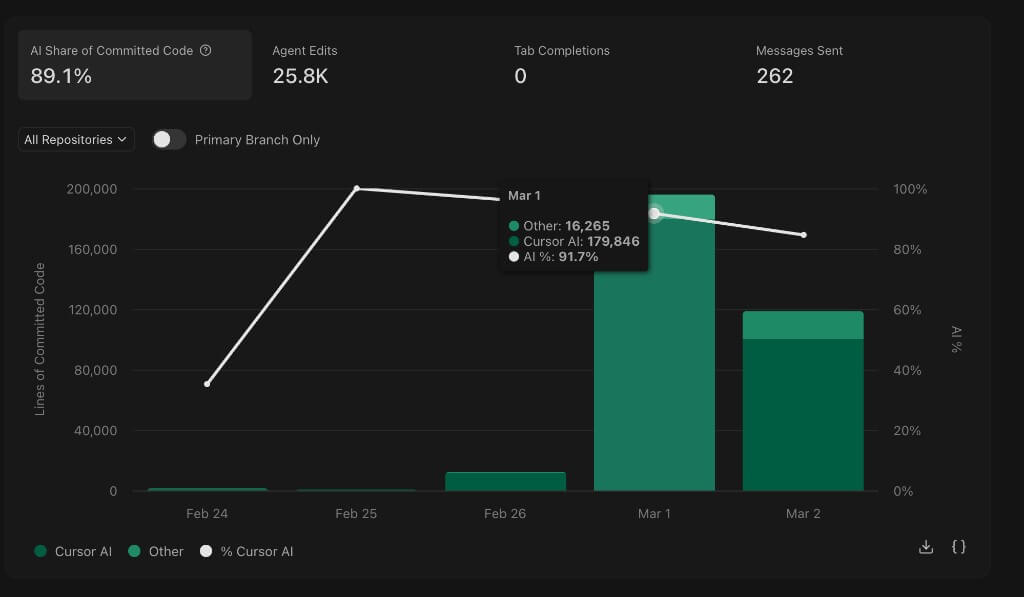
Reco runs a policy engine that evaluates JSONata expressions against billions of events — reference implementation in JavaScript, pipeline in Go, fleet of jsonata-js pods on Kubernetes serializing events over RPC at $300K/year. Their CTO handed Claude the JSONata spec and test suite and had it write Go code until every test passed. Seven hours. $400 in tokens. The result is gnata, a pure-Go implementation with a 1,000x speedup on common expressions. Combined with a rule engine refactor, it saved $500K/year.
→ Reco
For Practitioners
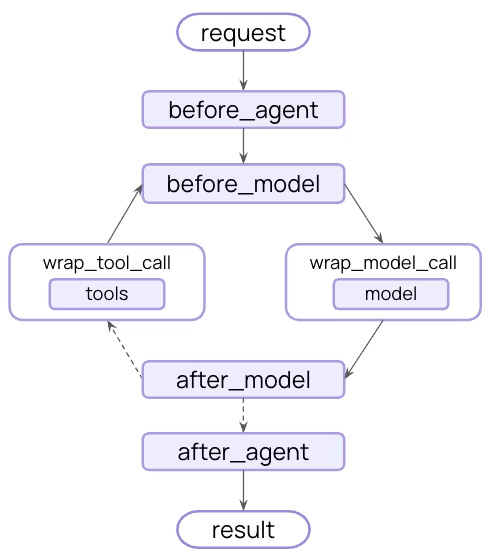
Production agents need more than the core loop — PII redaction before the model sees the data, retries when rate limits hit, summarization before context overflows, human interrupts before destructive tool calls. LangChain’s AgentMiddleware wraps each stage with hooks (before_model, wrap_model_call, wrap_tool_call, after_model) so you own those concerns without rewriting the harness. The design philosophy: some things will never move into the model. “You can’t prompt your way to HIPAA compliance.” LangChain ships prebuilt middleware for summarization, PII redaction, retries, and dynamic tool selection — Deep Agents, their batteries-included harness, is built entirely on top of it.
Something Good
Researchers at Penn, Carnegie Mellon, and Stanford used AI to map how pain signals are processed in the brain, then built a gene therapy that acts like morphine without triggering addiction. It targets only the pain circuits, leaves the reward pathways alone, and held up in trials. Published in Nature this week. 50 million Americans live with chronic pain. Most treatment options still run through opioids.