

Google declared the agentic era
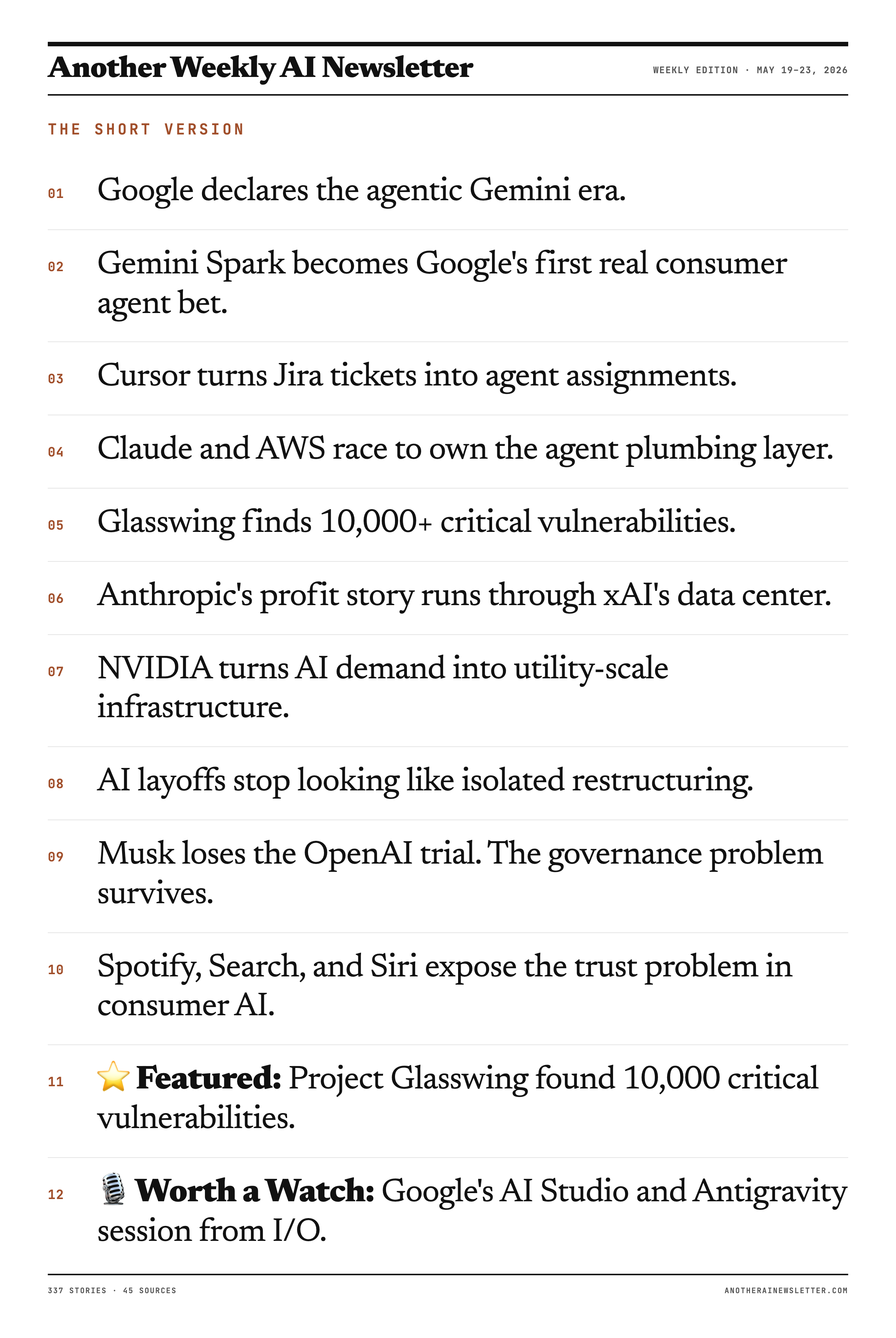
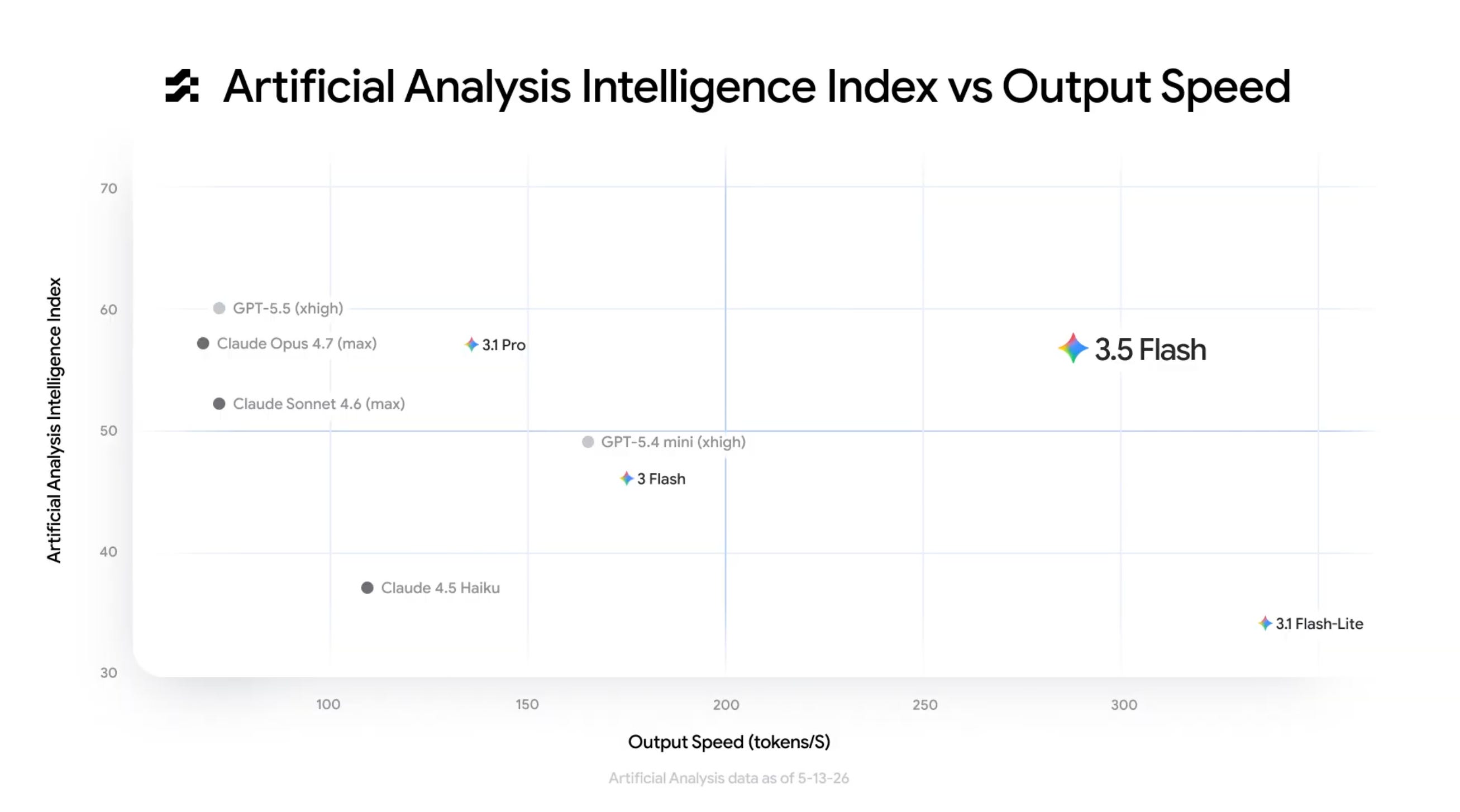
Gemini 3.5 Flash launched as the model for agents and coding. Google DeepMind framed it as frontier intelligence plus real-world action.
Gemini Spark arrived as a 24/7 cloud agent for Gmail, documents, inbox monitoring, and eventually purchases. TechCrunch described it as a personal assistant built from Gemini models and Google’s Antigravity agent harness.
Google redesigned Search around AI Mode and multimodal input. VentureBeat called it the first major search box redesign in 25 years.
Antigravity 2.0 launched with a desktop app and CLI.
Google also released Android CLI support so Claude Code, Codex, and other coding agents can build Android apps from the command line.
The thread: Gemini Spark is an exciting launch, but it depends on how embedded you are in Google’s ecosystem. It’s interesting that Gemini released a flash model first, however it seems to be benchmarking really well against other frontier models. Clearly Google is still in it and pioneering ahead.
Claude, AWS, Cursor, and LangChain shipped the agent plumbing layer
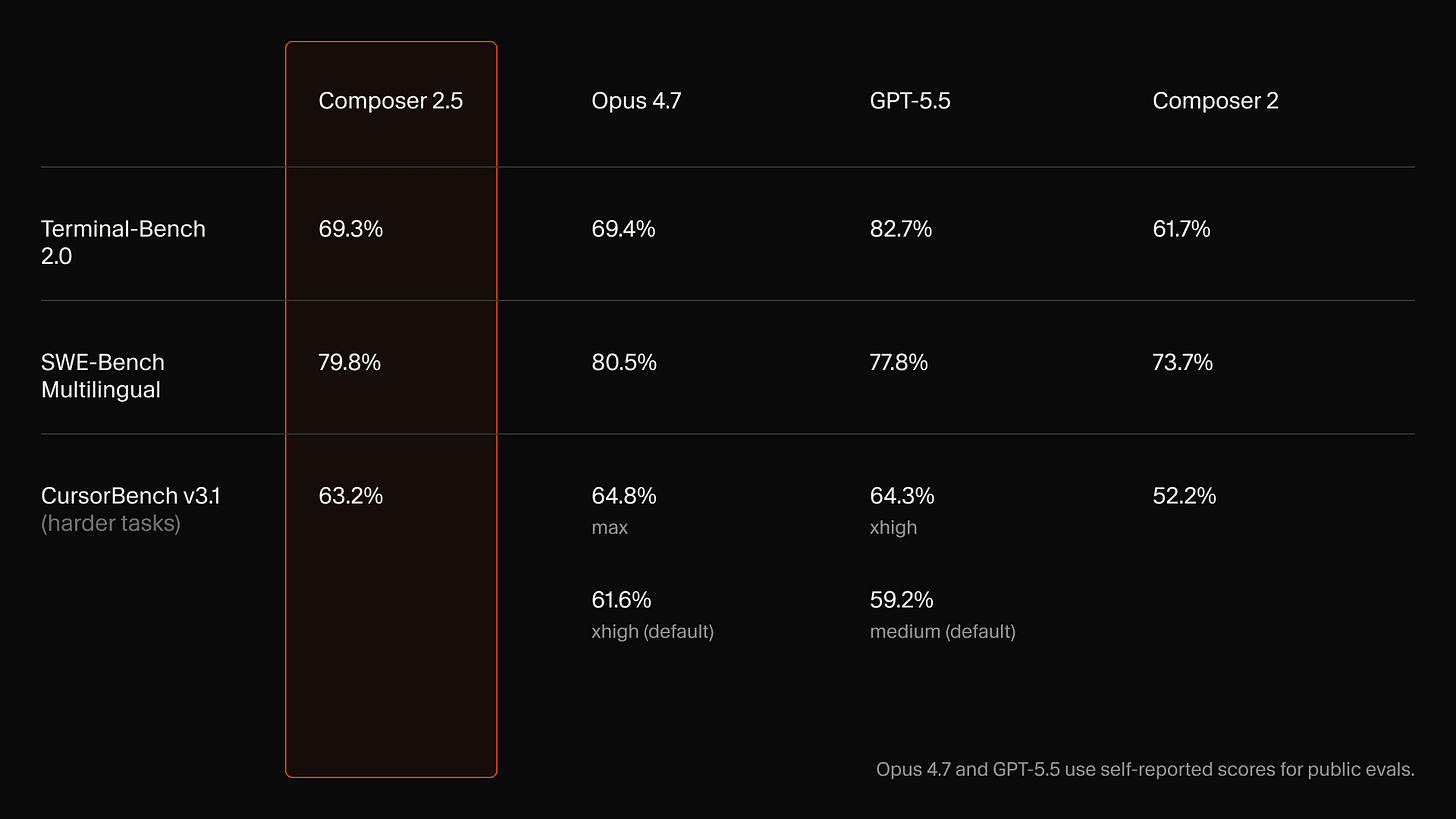
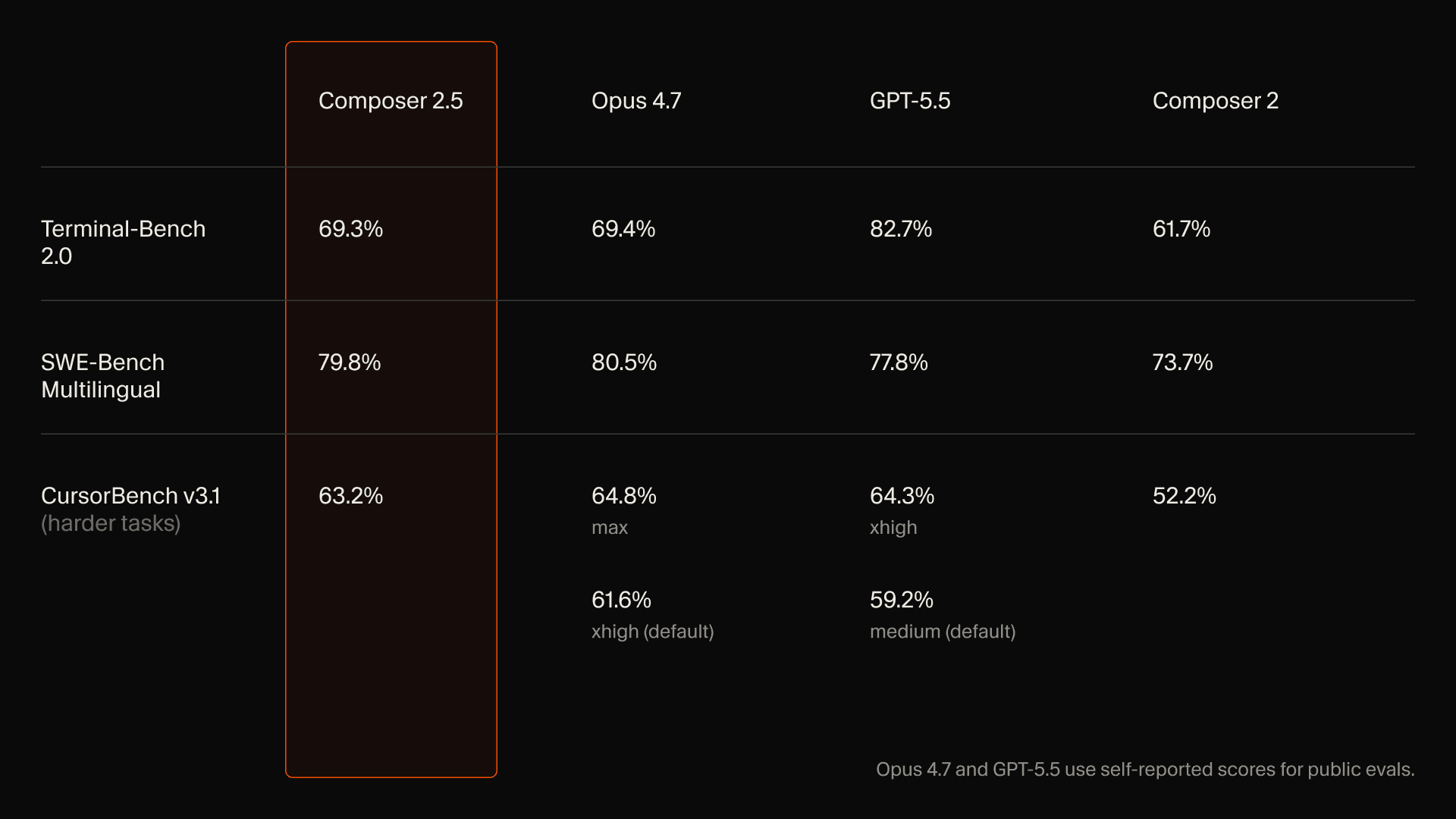
Cursor shipped Composer 2.5, then added Jira integration so teams can assign issues directly to cloud agents.
Cursor also opened SDK access for Python and TypeScript. The Cursor account framed it as a way to build your own agents with Composer 2.5.
Anthropic acquired Stainless, the SDK and MCP server platform that powered every Anthropic SDK.
Claude Managed Agents added self-hosted sandboxes and MCP tunnels, moving credentials and execution inside enterprise boundaries.
AWS published a full AgentCore content offensive: MCP memory, multi-tenant agents, BI agents, dashboard agents, HIPAA eligibility, and OpenAI-compatible SageMaker endpoints.
LangChain shipped LangSmith Engine, an agent for improving agents.
The thread: Composer 2.5 is now the most chosen model in Cursor and it appears that it is considerably cheaper than GPT-5.5 and Opus 4.7. Claude Managed Agents feels like its slowly becoming a full orchestration framework, but I am not sure how persistent memory is shared across enterprise with its design.
Compute became the business model
Anthropic told investors it expects its first operating profit, while compute costs may erase that profitability later.
SpaceX’s IPO filing revealed Anthropic agreed to pay xAI/SpaceX $1.25B per month for Colossus access.
OpenAI introduced Guaranteed Capacity, turning long-term compute access into a product.
NVIDIA reported $81.6B in Q1 revenue, up 85% year over year.
NVIDIA and IREN announced a 5 GW AI infrastructure partnership.
Simon Willison flagged the memory side: AI demand for HBM may reprice consumer electronics.
The thread: In case you didn’t read that correctly, thats billion with a capital B per MONTH for Colossus access. So, while they claim to achieve first operating profit, I am Interested to see if they can keep pace. NVIDIA is up 85% from last year and thats just bananas.
AI layoffs stopped looking like isolated restructuring
Intuit announced layoffs while signing deals with Anthropic and OpenAI.
Standard Chartered announced plans to cut 7,000+ jobs while accelerating AI investment.
CNBC found AI-related layoff announcements do not reliably boost stock prices.
Meta’s AI pivot and broader workforce cuts stayed in the week’s background via NPR.
The thread: Companies are not only performing AI restructuring for investors. Some appear to believe the operating model is changing whether the market rewards it immediately or not.
OpenAI won the trial. The governance questions survived
Musk’s lawsuit against OpenAI, Altman, Brockman, and Microsoft collapsed, removing an obstacle to OpenAI’s IPO path. Reuters covered the legal result.
The trial surfaced credibility fights around OpenAI’s nonprofit origins, commercial ambitions, and who gets to claim the original mission.
The Verge argued the case exposed something larger: the people leading AI may not be trusted to govern it.
The thread: OpenAI won legally. The trial still reinforced the industry’s trust problem.
⭐ Featured: Project Glasswing found 10,000 critical vulnerabilities
Anthropic’s Project Glasswing update is the most important direct-source read of the week.
Claude Mythos Preview and roughly 50 partners found more than 10,000 high- or critical-severity vulnerabilities in essential software. The key sentence was not the number. It was the bottleneck shift: discovery is no longer the hard part. Verification, disclosure, and patching are.
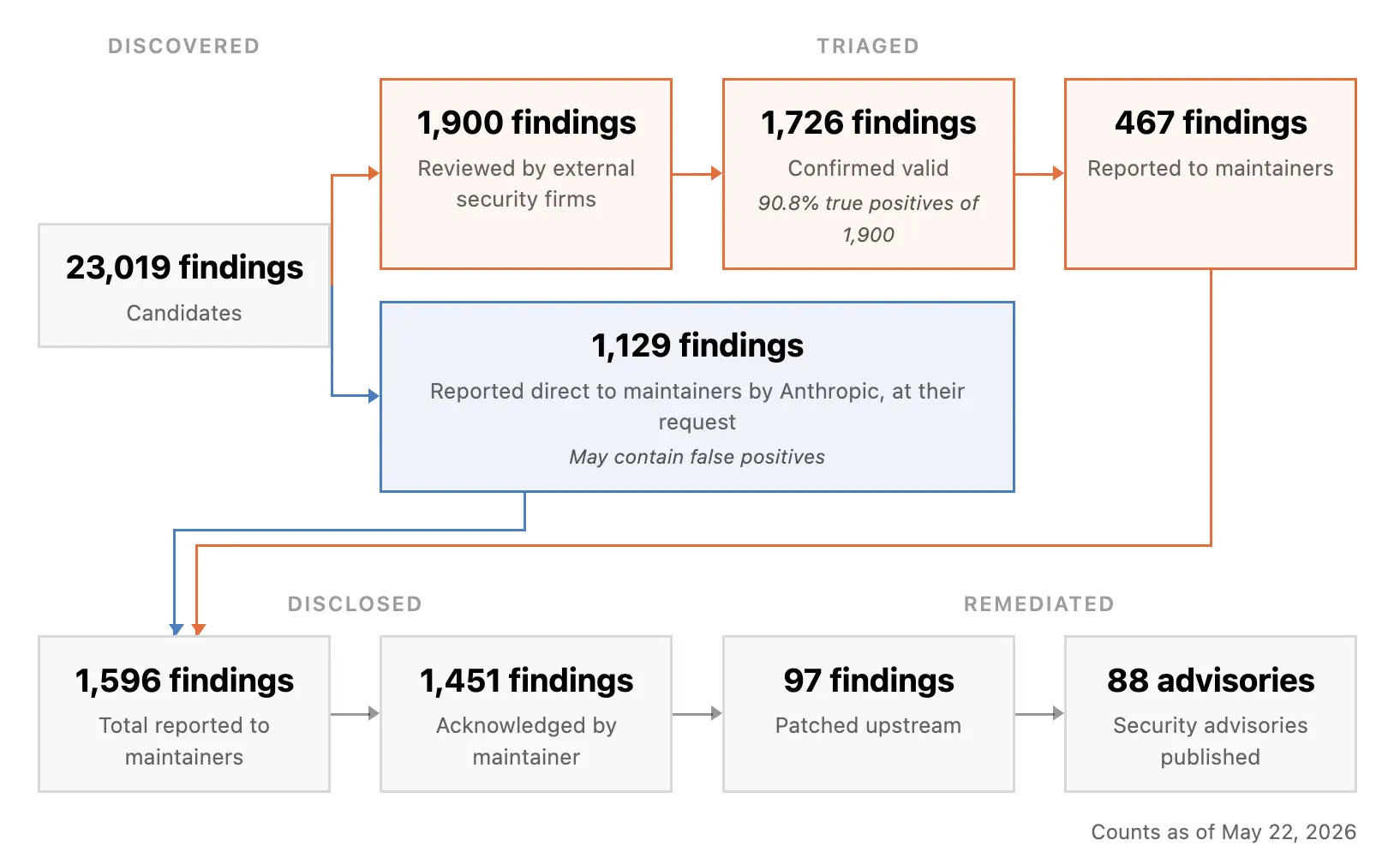
The downstream effects moved fast. The UK Government Digital Service pushed back on closing public repositories after AI-discovered vulnerabilities. Reuters reported Anthropic will brief the Financial Stability Board, turning this from a software-security issue into a systemic-risk discussion.
What makes Glasswing different is scale. Coordinated disclosure was built for individual researchers finding individual bugs. AI-assisted scanning can produce vulnerability volume at industrial scale. The process was not designed for this.
What to watch for: whether labs that discover vulnerabilities at scale are forced to build remediation infrastructure too.
🎙️ Worth a Listen
The AI Studio half is “build a business from a prompt”: research agents, agentic focus groups, Stitch designs, Workspace integration, Sheets-backed dashboards, Cloud Run deployment, and marketing tools in one flow.
The Antigravity half is the real signal: sub-agents, background tasks, hooks, artifacts, project permissions, scheduled agents, browser agents, CLI, SDK, and managed API.
Quick Hits
OpenAI says a model disproved a central discrete-geometry conjecture | OpenAI — External mathematicians checked the proof.
LeRobot Humanoid | Hugging Face — A roughly $2,500 open humanoid robotics platform.
Cohere released Command A+ | VentureBeat — Apache 2.0 licensing, native citations, enterprise-friendly model packaging.
Spotify and UMG struck a deal for AI covers and remixes | TechCrunch — Licensed AI music moves from taboo to product.
Spotify launched AI podcast tools | TechCrunch — Podcasts become queryable, summarizable AI surfaces.
Spotify launched an ElevenLabs audiobook tool | TechCrunch — AI narration enters the audiobook workflow.
AI startups are stretching ARR | TechCrunch — The AI revenue story is getting less clean.
ArXiv will ban researchers for AI slop submissions | 404 Media — Academic publishing’s authentication problem now has teeth.
Apple’s Siri revamp may auto-delete chats | The Verge — Privacy becomes Apple’s AI wedge.
Students booed Eric Schmidt’s AI commencement speech | The Verge — The public mood is not matching the industry’s launch calendar.